Engine Oil Changes & Fluid Maintenance in Dubai: A Practical Guide
By Auto Millennium | Mechanic Clinic – Mechanical Workshop Division
Engine oil and fluid maintenance is the most basic form of vehicle care, yet it's also the single biggest factor in long-term engine reliability. In the UAE's climate, where sustained high temperatures place extra stress on lubricants and cooling systems, staying on top of oil changes and fluid checks matters even more than in milder markets. Auto Millennium's Mechanic Clinic handles this as part of routine servicing across all vehicle types.
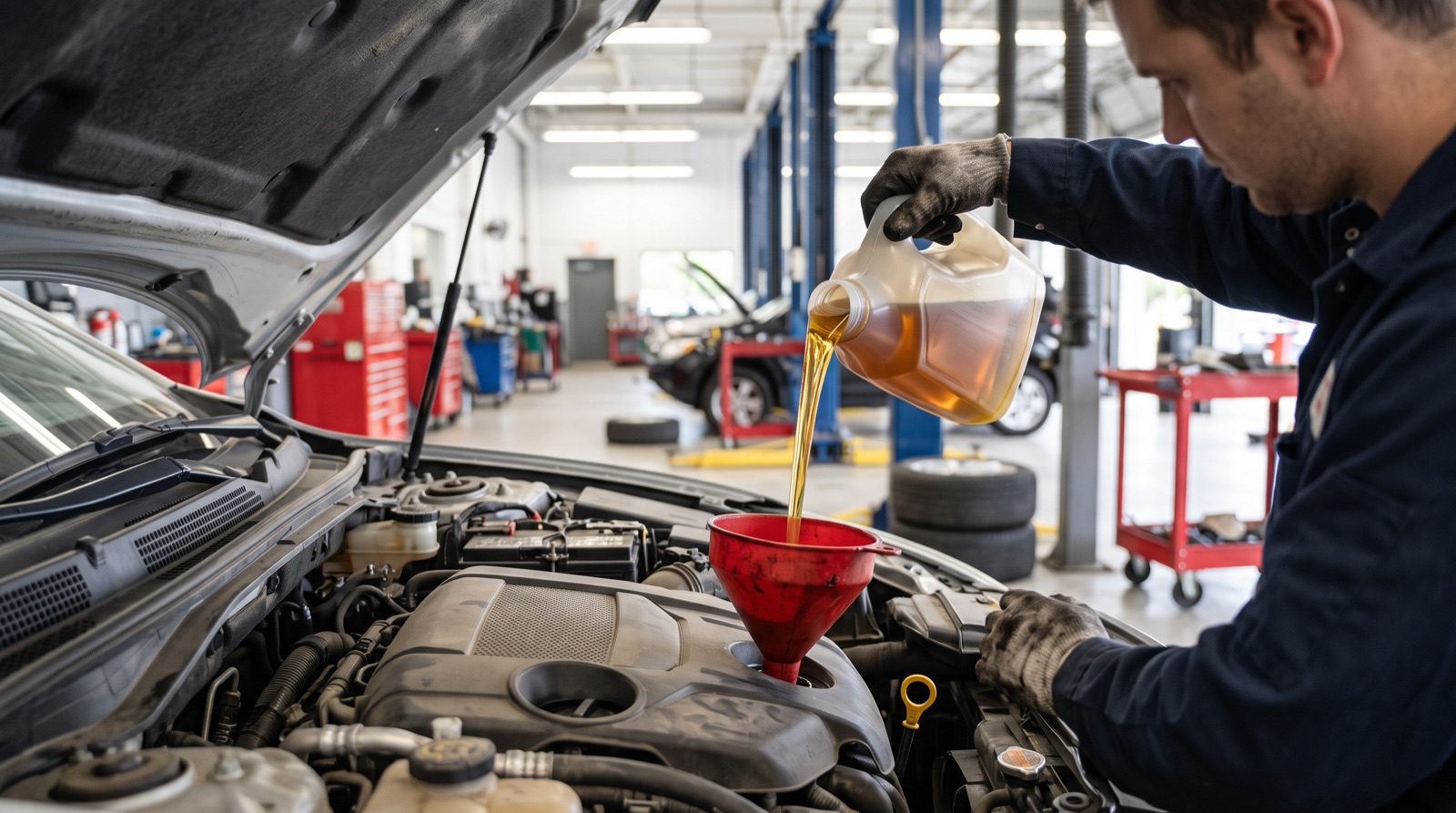
Why Oil Changes Matter More in the UAE
Engine oil lubricates moving parts, helps dissipate heat, and carries away small contaminants that build up during normal operation. Sustained high ambient temperatures — common for most of the year in the UAE — accelerate oil breakdown, reducing its ability to protect the engine effectively. This is why oil change intervals and oil grade selection are often adjusted for hot climates compared to manufacturer defaults calibrated for milder markets.
What a Complete Fluid Maintenance Check Covers
- Engine oil and filter: Replacing oil and the filter to maintain proper lubrication and contaminant control.
- Coolant: Checking level and condition to ensure the cooling system can manage engine temperature effectively.
- Brake fluid: Verifying fluid condition, since brake fluid absorbs moisture over time, which can affect braking performance.
- Transmission fluid: Checking level and condition to support smooth gear operation.
- Power steering fluid: Ensuring proper level for consistent steering feel.
- Washer fluid: A simple but often overlooked top-up during routine servicing.
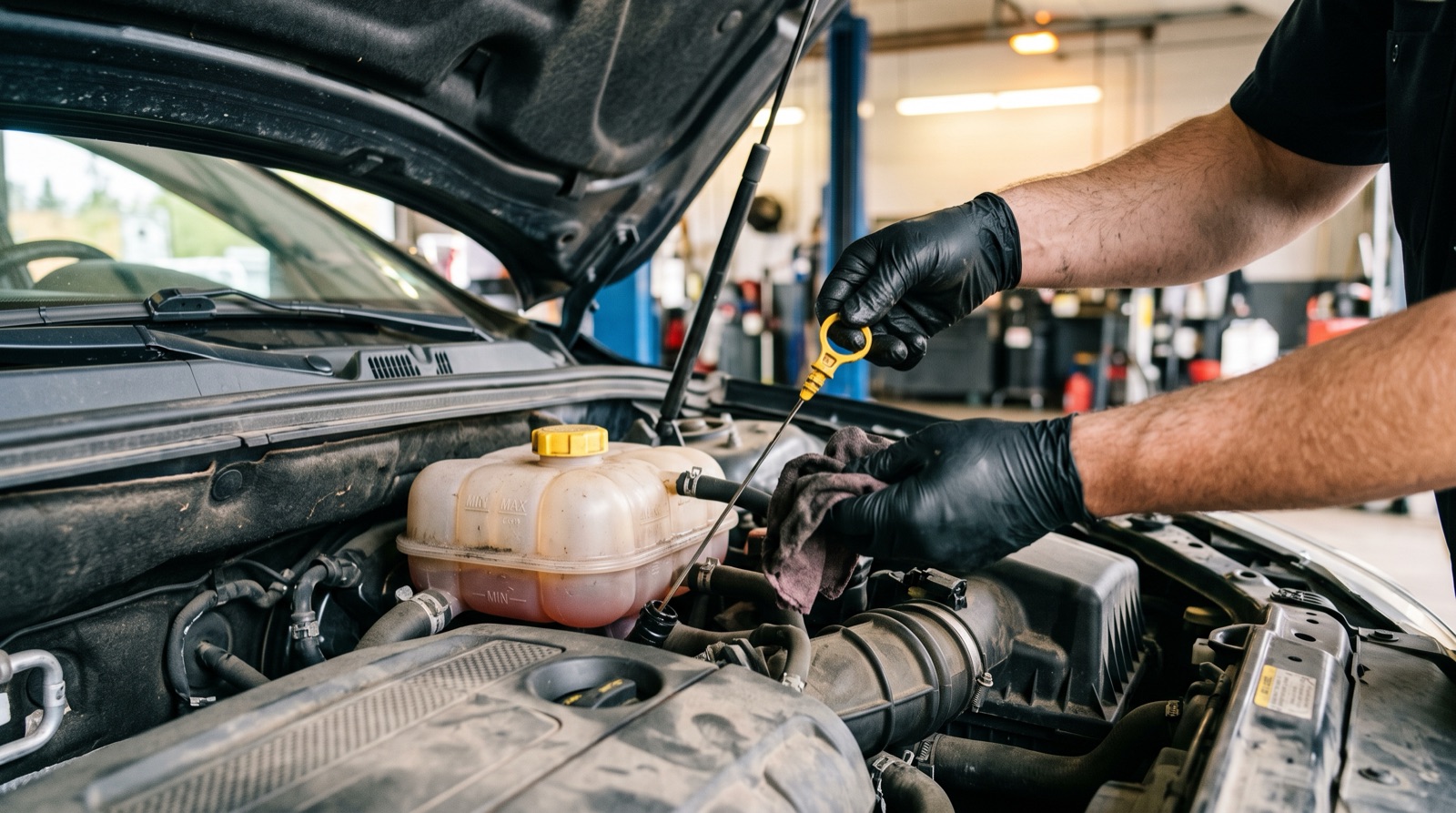
The Oil Change Process, Step by Step
- Vehicle intake and mileage check: Reviewing service history to confirm the correct interval and oil specification.
- Draining old oil: Removing used oil from the engine and disposing of it properly.
- Filter replacement: Installing a new oil filter alongside the fresh oil.
- Refilling with correct-grade oil: Using the oil grade specified for the vehicle and climate conditions.
- Fluid top-ups and checks: Reviewing and topping up other fluids as part of the same visit.
- Reset and final check: Resetting the service reminder and confirming no leaks after the change.
Common Mistakes Vehicle Owners Make
- Following generic intervals regardless of climate: Manufacturer intervals are often set for average global conditions, not extreme heat.
- Using the wrong oil grade: Lower-viscosity oils not suited to high heat can break down faster and offer less protection.
- Only checking engine oil and ignoring other fluids: Neglected coolant or brake fluid can lead to separate, avoidable issues.
- Delaying service after a warning light: Oil-related warning indicators shouldn't be ignored, even if the vehicle seems to run fine.
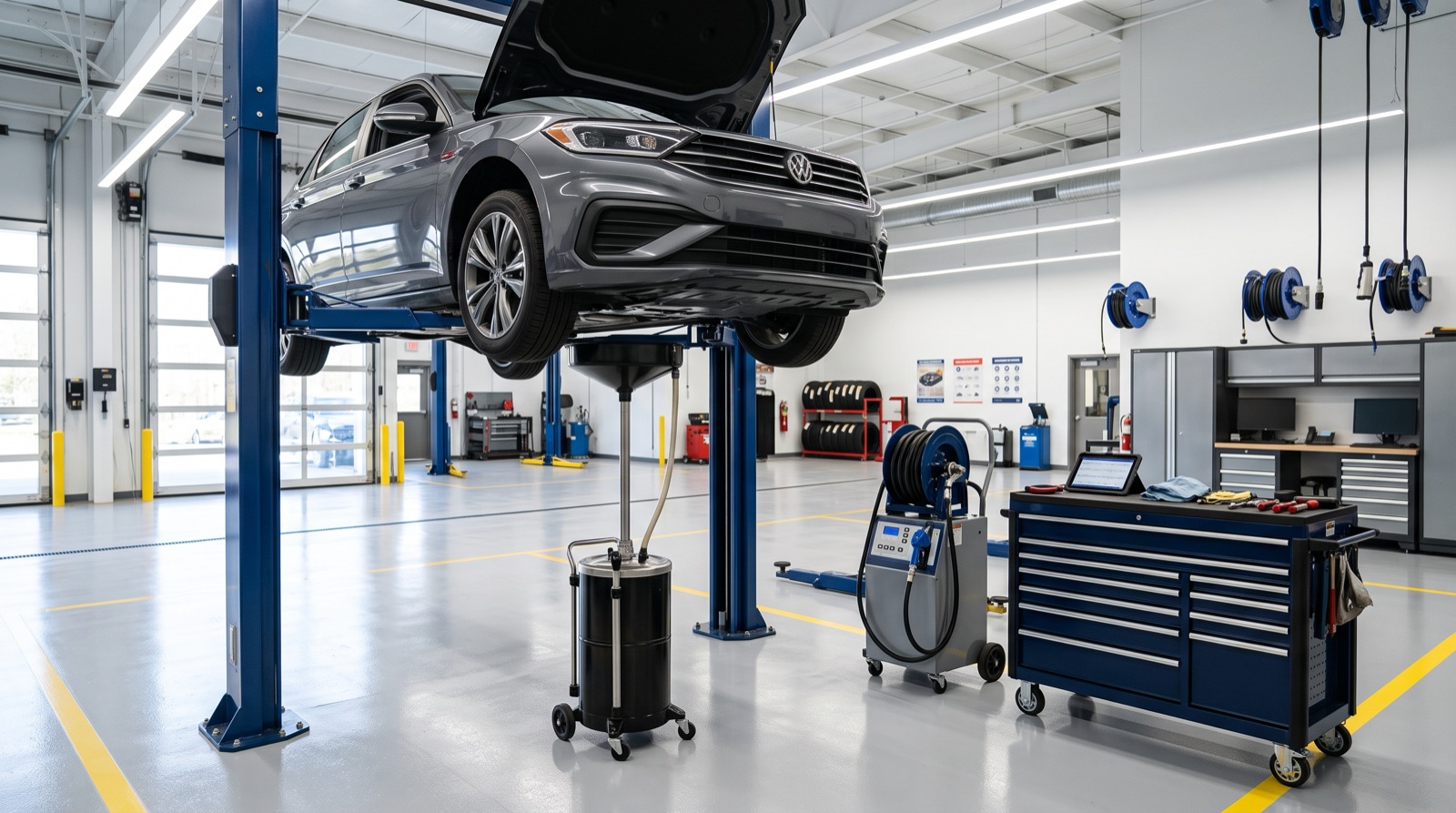
Fluid Types and What They Protect
| Fluid | Primary Role | Sign of a Problem |
|---|---|---|
| Engine Oil | Lubrication and heat dissipation | Dark, gritty oil or low level on dipstick |
| Coolant | Regulates engine temperature | Overheating or low reservoir level |
| Brake Fluid | Transfers force to the braking system | Soft or spongy brake pedal |
| Transmission Fluid | Lubricates gear operation | Rough or delayed shifting |
Frequently Asked Questions
How often should I change my car's engine oil in the UAE?
Manufacturer intervals typically range from 5,000 to 10,000 kilometers, but vehicles driven frequently in extreme heat or heavy traffic often benefit from servicing toward the shorter end of that range, since high temperatures accelerate oil breakdown.
Does extreme heat affect engine oil differently than in cooler climates?
Yes. Sustained high temperatures cause oil to break down and lose viscosity faster, which is why oil grade selection and change intervals are often adjusted for hot climates compared to manufacturer defaults set for milder markets.
What other fluids should be checked during a service, besides engine oil?
A complete fluid check typically covers coolant, brake fluid, transmission fluid, power steering fluid, and windshield washer fluid, since each plays a role in the vehicle's overall reliability and safety.
What happens if I skip oil changes for too long?
Old, degraded oil loses its ability to properly lubricate and cool engine components, which increases wear and can eventually lead to more serious and costly engine damage.